Introduction to Comet 3I/ATLAS
Comet 3I/ATLAS represents one of the most fascinating developments in modern astronomy. As an interstellar object, it is believed to have originated outside our solar system, making it a rare opportunity for scientists to study material formed around another star.
Interstellar visitors are extremely uncommon, and each new detection provides invaluable clues about planetary formation across the galaxy. Comet 3I/ATLAS has captured the attention of astronomers and space enthusiasts alike because it offers a glimpse into cosmic environments far beyond our own.
This article explores everything you need to know about comet 3I/ATLAS — from its discovery and characteristics to its scientific significance and what it means for the future of space exploration.
Understanding Interstellar Comets
What Is an Interstellar Object?
An interstellar object is a celestial body that originates outside the Sun’s gravitational influence. Unlike typical comets that orbit the Sun, these travelers move on hyperbolic trajectories, passing through the solar system only once before continuing their journey through interstellar space.
Why They Matter
Studying interstellar objects helps scientists:
-
Understand planetary formation in other star systems
-
Compare chemical compositions across the galaxy
-
Learn about the distribution of organic molecules in space
Comet 3I/ATLAS is especially important because each new interstellar detection improves our statistical understanding of how common these visitors may be.
Discovery of Comet 3I/ATLAS
Comet 3I/ATLAS was detected by the ATLAS (Asteroid Terrestrial-impact Last Alert System), a global network of telescopes designed to identify near-Earth objects and other transient phenomena.
How It Was Found
The discovery process typically involves:
-
Automated sky scans detecting moving objects
-
Follow-up observations to confirm motion
-
Orbital calculations revealing a hyperbolic trajectory
Once scientists determined that its orbit was not bound to the Sun, the object was classified as the third known interstellar visitor, hence the designation “3I.”
What Makes Comet 3I/ATLAS Unique
A Rare Opportunity
Interstellar objects pass through the solar system quickly, giving astronomers only a limited window for observation. Comet 3I/ATLAS provides a fresh chance to collect data with more advanced instruments than were available for earlier discoveries.
Potentially Pristine Material
Because it formed around another star, its composition may differ significantly from comets in our solar system, offering clues about:
-
Variations in planetary system chemistry
-
Differences in dust and ice formation
-
Organic molecule abundance
Orbital Path and Trajectory
Hyperbolic Orbit
Comet 3I/ATLAS follows a hyperbolic path, meaning it is not gravitationally bound to the Sun. This trajectory confirms its interstellar origin.
Key Orbital Characteristics
-
Extremely high incoming velocity
-
One-time pass through the solar system
-
Eventual return to interstellar space
Tracking its motion helps astronomers determine its likely origin direction in the galaxy.
Composition and Physical Characteristics
Surface and Structure
Early observations suggest comet 3I/ATLAS likely consists of:
-
Frozen volatiles such as water and carbon compounds
-
Rocky dust grains
-
Organic molecules
Coma and Tail Formation
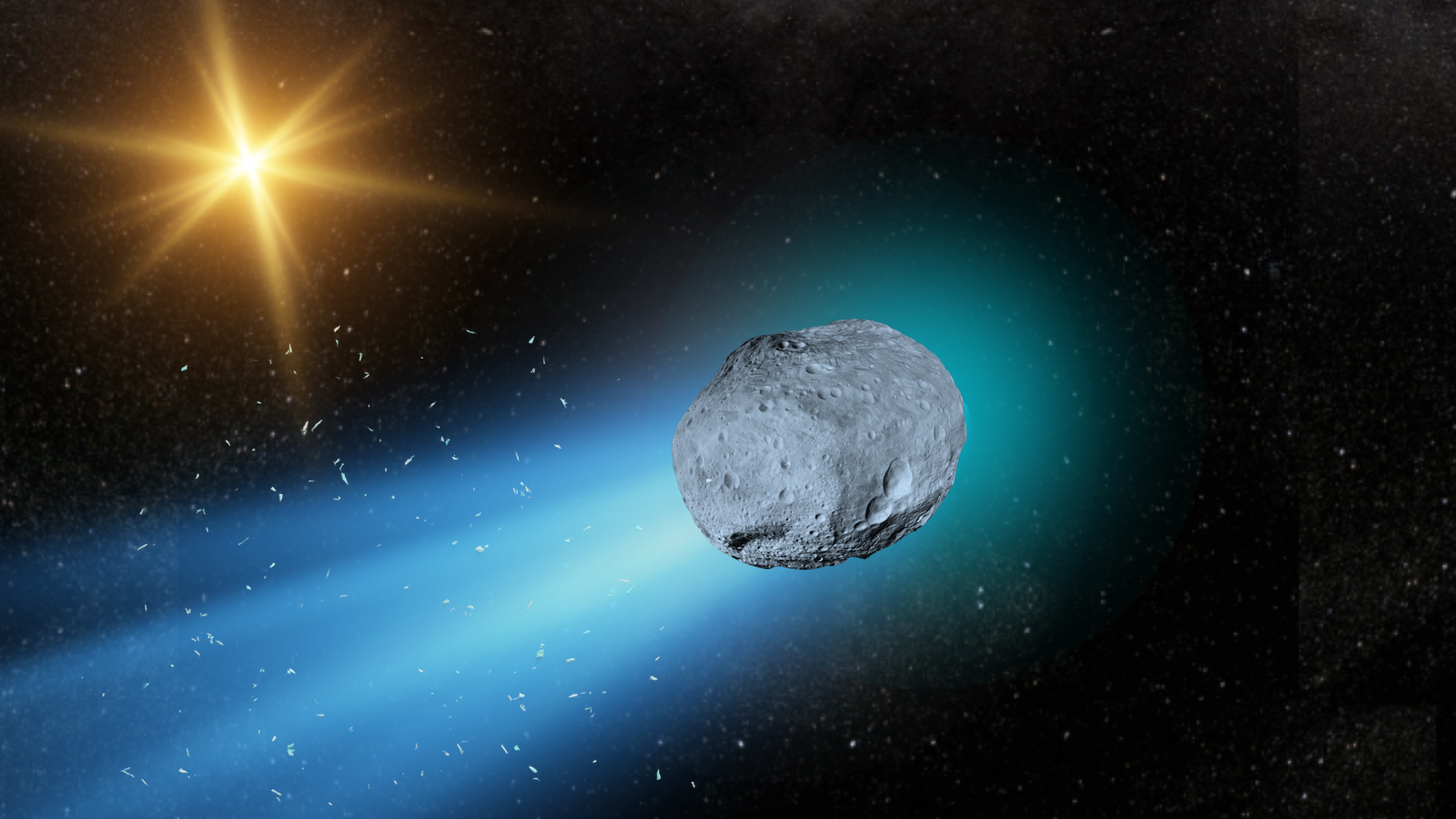
As it approaches the Sun, solar radiation causes ices to sublimate, forming a glowing coma and tail — a hallmark of cometary activity.
Scientific Importance of Comet 3I/ATLAS
A Window Into Other Solar Systems
Every interstellar comet acts like a natural probe, carrying information about the environment where it formed.
Scientists can analyze:
-
Isotopic ratios
-
Chemical fingerprints
-
Dust particle properties
These insights help refine models of planetary formation beyond our solar system.
Comparison With Previous Interstellar Objects
1I ʻOumuamua
The first known interstellar visitor, ʻOumuamua, surprised scientists with its unusual shape and lack of typical cometary activity.
2I/Borisov
The second visitor, 2I/Borisov, behaved more like a traditional comet, displaying a clear coma and tail.
How Comet 3I/ATLAS Fits In
Comet 3I/ATLAS provides a third data point, helping scientists determine whether interstellar objects share common characteristics or show wide diversity.
How Scientists Study Interstellar Comets
Observational Techniques
Researchers use a combination of methods:
-
Optical telescopes to track motion
-
Spectroscopy to analyze chemical composition
-
Infrared imaging to measure heat signatures
International Collaboration
Space agencies and observatories around the world coordinate observations to maximize data collection during the short visibility window.
Potential Insights About Other Star Systems
Studying comet 3I/ATLAS could reveal:
-
How common comet formation is in other systems
-
Whether organic molecules are widespread
-
Differences in planetary disk chemistry
This information contributes to broader questions about the likelihood of life elsewhere in the universe.
Observing Comet 3I/ATLAS From Earth
Visibility
Depending on its brightness and distance, comet 3I/ATLAS may be observable through:
-
Amateur telescopes
-
Professional observatories
Best Viewing Conditions
-
Dark skies with minimal light pollution
-
Clear atmospheric conditions
-
Tracking its predicted path
Astronomy communities often share updated viewing charts as new observations refine its orbit.
Challenges in Tracking Interstellar Objects
Speed and Faintness
Interstellar objects move extremely fast relative to solar system bodies, making them difficult to track.
Limited Observation Window
Because they only pass through once, astronomers must gather as much data as possible in a short time.
The Role of Modern Sky Surveys
Automated Detection Systems
Programs like Pan-STARRS and ATLAS scan the sky nightly, increasing the chances of discovering new interstellar visitors.
Why Technology Matters
Improved detectors and AI-assisted analysis are expected to dramatically increase discovery rates in the coming decades.
Future Missions and Research Opportunities
Possibility of Interception Missions
Scientists have proposed spacecraft missions designed to intercept future interstellar objects, allowing direct sampling.
Advances in Telescope Technology
Next-generation observatories will enable earlier detection, providing more time for study and potential mission planning.
Myths and Misconceptions
Is It Dangerous?
There is no evidence that comet 3I/ATLAS poses any threat to Earth. Interstellar objects typically pass at safe distances.
Alien Technology Claims
As with previous interstellar discoveries, speculative claims occasionally arise, but there is no scientific evidence supporting such ideas.
The Future of Interstellar Object Research
With improved sky surveys and more powerful telescopes, astronomers expect interstellar detections to become more frequent. Each discovery, including comet 3I/ATLAS, helps refine our understanding of the galaxy’s planetary systems.
In the future, scientists may even build dedicated missions to capture or sample such objects, opening an entirely new field of comparative planetary science.
Conclusion
Comet 3I/ATLAS stands as a remarkable milestone in astronomy, offering a rare chance to study material from beyond our solar system. From its discovery by advanced sky surveys to its scientific implications, this interstellar visitor highlights how rapidly our ability to detect and analyze cosmic phenomena is evolving.
As technology advances and detection rates increase, objects like comet 3I/ATLAS will continue to reshape our understanding of planetary formation, cosmic chemistry, and the broader structure of our galaxy. Each interstellar visitor is not just a passing object but a messenger carrying clues from distant star systems.
FAQs
1. What is comet 3I/ATLAS?
Comet 3I/ATLAS is an interstellar comet believed to have originated outside our solar system, making it the third known object of its kind detected passing through.
2. Why is it called “3I”?
The “3I” designation means it is the third confirmed interstellar object discovered.
3. Who discovered comet 3I/ATLAS?
It was detected by the ATLAS sky survey system, which specializes in identifying moving objects in space.
4. Can comet 3I/ATLAS be seen from Earth?
Depending on its brightness and distance, it may be visible with telescopes, though detailed observations are primarily conducted by professional observatories.
5. Does it pose any danger to Earth?
No, its trajectory indicates it will pass safely through the solar system without risk of impact.
6. Why are interstellar comets important?
They provide direct physical evidence about the composition and formation of planetary systems beyond our own.