
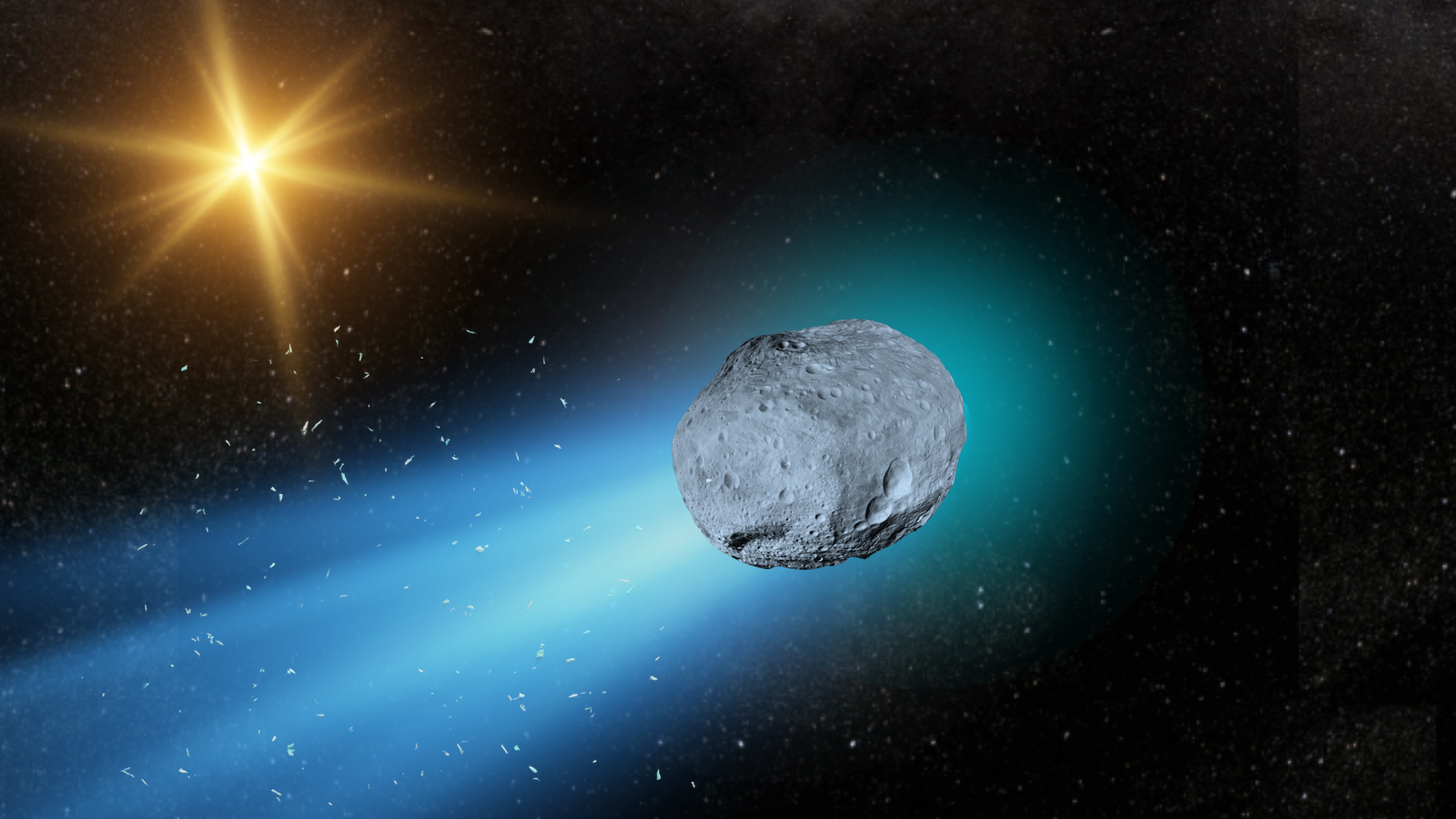
The discovery of interstellar objects passing through our solar system has transformed modern astronomy, offering rare glimpses into planetary systems beyond our own. Among these fascinating travelers, the topic “interstellar comet 3I atlas nasa” has captured widespread attention due to its scientific importance, mystery, and potential to reshape our understanding of cosmic origins.
This comprehensive article explores everything you need to know about interstellar comet 3I/ATLAS, including its discovery, trajectory, scientific significance, observational methods, and what it reveals about the universe. Whether you’re a casual space enthusiast or an avid astronomy reader, this guide delivers deep insights in an easy-to-understand format.
Introduction to Interstellar Comets
Interstellar comets are celestial objects that originate outside our solar system and travel through it on hyperbolic trajectories. Unlike typical comets bound by the Sun’s gravity, these visitors are merely passing through, carrying chemical and structural information from distant star systems.
The growing ability of modern sky surveys to detect faint, fast-moving objects has ushered in a new era of interstellar astronomy. Each discovery provides scientists with a natural sample from another planetary system — something that was unimaginable just decades ago.
What Is Interstellar Comet 3I/ATLAS?
Interstellar comet 3I/ATLAS is considered the third confirmed interstellar object detected passing through our solar system. The designation “3I” indicates its status as the third interstellar discovery, while “ATLAS” refers to the survey system responsible for its detection.
Key Characteristics
-
Hyperbolic orbit indicating origin outside the solar system
-
High velocity compared to typical comets
-
Likely formed around another star billions of years ago
-
Exhibits comet-like activity such as a coma and tail
Its discovery represents a major milestone because each new interstellar object helps refine estimates of how common such travelers are in our galaxy.
Discovery and Observation History
Initial Detection
The comet was first detected by an automated sky survey designed to identify near-Earth objects and transient astronomical phenomena. Its unusual speed and trajectory quickly signaled that it was not gravitationally bound to the Sun.
Confirmation Process
Astronomers worldwide collaborated to confirm:
-
Orbital calculations
-
Spectroscopic signatures
-
Cometary activity
Within days, the object was classified as an interstellar comet, triggering global observation campaigns.
The Role of NASA in Studying 3I/ATLAS
Coordinating Observations
NASA plays a central role in analyzing interstellar objects by coordinating data from:
-
Space telescopes
-
Ground-based observatories
-
Planetary defense networks
Through its Near-Earth Object Observation Program, the agency ensures rapid follow-up observations to determine an object’s trajectory and properties.
Scientific Goals
NASA’s research focuses on:
-
Determining chemical composition
-
Measuring size and rotation
-
Studying interaction with solar radiation
-
Modeling its origin and age
These studies help scientists compare materials across planetary systems.
Orbital Path and Trajectory
Hyperbolic Orbit
Unlike typical comets that follow elliptical orbits, 3I/ATLAS travels on a hyperbolic path, meaning it will enter and then permanently leave the solar system.
Trajectory Highlights
-
Approaches from the outer solar system
-
Passes near the Sun at high velocity
-
Exits toward interstellar space
This fleeting journey gives astronomers only a limited window to collect data, making rapid observation essential.
Composition and Physical Characteristics
Surface and Structure
Spectroscopic observations suggest the comet contains:
-
Water ice
-
Organic molecules
-
Silicate dust
These components resemble those found in solar system comets, hinting that planetary formation processes may be similar across the galaxy.
Size and Shape
Early estimates suggest a nucleus likely a few kilometers across, though exact dimensions depend on reflectivity and activity levels.
Why Interstellar Objects Matter
Studying interstellar comets like 3I/ATLAS helps answer fundamental questions:
-
How common are planetary systems?
-
What materials exist in other stellar environments?
-
Are building blocks of life widespread?
Each object acts as a time capsule from another region of the Milky Way.
Comparison With Previous Interstellar Visitors
Key Differences
Compared to earlier interstellar objects, 3I/ATLAS may show:
-
Stronger cometary activity
-
Different chemical ratios
-
Alternative formation environment
Comparisons help scientists identify whether our solar system is typical or unique.
Scientific Instruments and Observation Techniques
Ground-Based Telescopes
Large optical telescopes track brightness changes, rotation, and tail development.
Space-Based Observations
Infrared and ultraviolet instruments analyze:
-
Gas emissions
-
Thermal properties
-
Dust composition
Combining these datasets provides a detailed picture of the comet’s behavior.
Potential Missions and Future Research
Concepts for Interception
Scientists have proposed rapid-response spacecraft missions capable of intercepting future interstellar objects. While no mission has yet reached one, planning efforts are underway.
Long-Term Goals
Future research aims to:
-
Improve detection speed
-
Develop dedicated interstellar probes
-
Study multiple objects to build statistical models
Public Interest and Cultural Impact
The idea of an object from another star system passing through our cosmic neighborhood sparks widespread curiosity. Media coverage, educational programs, and citizen-science projects help bring interstellar research to the public.
For many, these discoveries symbolize humanity’s growing ability to explore beyond our immediate environment.
Challenges in Studying Interstellar Comets
Despite their scientific value, interstellar objects present significant challenges:
Limited Observation Time
They move quickly, leaving only months or years for study.
Faintness
Small size and distance make detection difficult.
Unpredictable Activity
Outgassing can alter brightness and complicate measurements.
What 3I/ATLAS Reveals About Other Star Systems
By analyzing isotopic ratios and chemical signatures, scientists can infer:
-
Temperature conditions in its birth environment
-
Possible presence of planetary formation processes
-
Similarities to solar system materials
These insights contribute to a broader understanding of how planetary systems evolve.
Future of Interstellar Object Detection
Advances in telescope technology and automated surveys are expected to dramatically increase discovery rates.
Next-Generation Surveys
Upcoming observatories will:
-
Scan larger areas of sky nightly
-
Detect fainter objects
-
Provide earlier alerts
This means interstellar visitors may soon become relatively common discoveries rather than rare events.
Conclusion
The story of interstellar comet 3I atlas nasa represents a remarkable chapter in modern astronomy. As only the third known visitor from beyond our solar system, it offers a rare opportunity to study material formed around another star.
Through coordinated observations, advanced instrumentation, and global collaboration, scientists continue to unlock clues about planetary formation, cosmic chemistry, and the broader structure of our galaxy.
Each interstellar object deepens our understanding of the universe and reminds us that our solar system is just one of countless stellar neighborhoods in the Milky Way. With improved detection technologies and potential future missions, humanity stands at the beginning of an exciting era — one where studying visitors from other star systems may become routine rather than extraordinary.
FAQs
1. What does “3I” mean in interstellar comet 3I/ATLAS?
It indicates the object is the third confirmed interstellar discovery.
2. Why is 3I/ATLAS important?
It provides direct material evidence from another planetary system, helping scientists compare cosmic environments.
3. Can interstellar comets pose a threat to Earth?
No. Their trajectories typically keep them far from Earth, and their high speeds make gravitational capture unlikely.
4. How long will 3I/ATLAS remain visible?
Observation windows vary, but interstellar objects usually remain observable for months to a few years.
5. Could a spacecraft visit an interstellar comet?
Future rapid-launch missions may attempt flybys, but timing and speed make such missions technically challenging.


