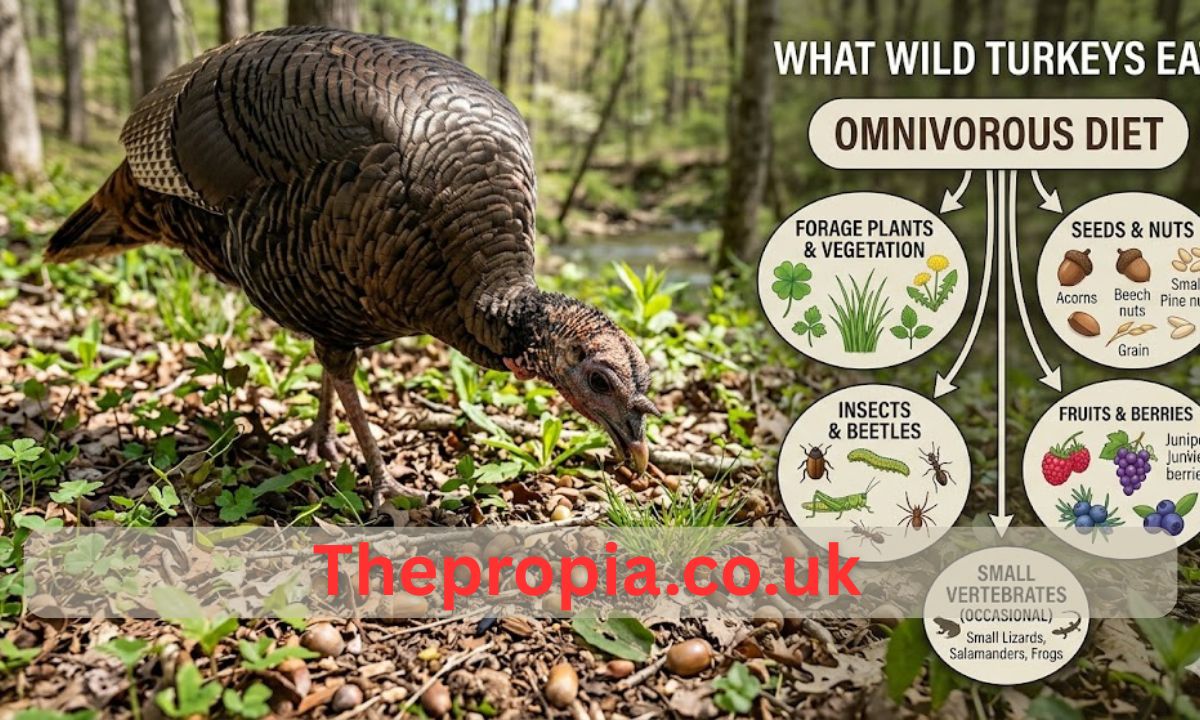
Turkeys are omnivores, which means they eat both plant and animal matter. In the wild, most of an adult turkey’s diet comes from plants such as seeds, fruits, grasses, nuts, and other forage. A smaller share comes from insects, snails, spiders, and similar protein-rich foods. That mix changes a little with season, habitat, and age.
Young turkeys, called poults, do not eat exactly like adults. During their first weeks, they rely heavily on insects and other invertebrates because they need extra protein for rapid growth, tissue development, and strong bones. As they mature, their diet shifts toward more seeds, leaves, fruits, and mast such as acorns.
Domestic turkeys also need a different approach than wild birds. Wild turkeys survive by foraging across seasons, but backyard and farm turkeys do best on balanced commercial rations designed for their age. Treats and natural extras can be added in moderation, but they should support the main diet rather than replace it.
Natural Foods Wild Turkeys Prefer
Wild turkeys eat a broad range of natural foods. Common items include acorns, beech nuts, berries, seeds, grasses, forbs, foliage, and soft mast from shrubs and woodland plants. They also eat beetles, grasshoppers, ants, spiders, and snails when available. Their diet is flexible, which helps them adapt to forests, field edges, and mixed habitats.
Season matters a lot. In spring and summer, turkeys use openings and grassy areas where insects, green plants, and fresh forage are easier to find. In fall and winter, hard mast becomes more important, especially acorns. When mast is limited, wild turkeys may also feed on leftover grain in harvested agricultural fields.
Turkeys usually find food by scratching through leaf litter and ground cover with their feet. This behavior helps them uncover seeds, nuts, insects, and other hidden food sources. Good habitat for turkeys is not just about trees. It also includes openings, edges, and diverse plant growth that provide both cover and a year-round food supply.
What Is a Turkey’s Favorite Food?
There is no single food that every turkey prefers in every season, but acorns are widely described as one of the most important and preferred foods for juvenile and adult wild turkeys during fall and winter. In oak-rich habitats, acorn crops strongly influence where turkeys gather and how well they maintain energy through colder months.
For young poults, the answer is different. Their strongest food preference is usually high-protein live food such as insects and other invertebrates. That is not just a taste issue. It is tied to survival, early growth, and physical development. A poult that finds enough insect food early in life has a much better nutritional start.
For domestic turkeys, the most useful answer is practical rather than romantic. Their best “favorite” food should be a fresh, age-appropriate turkey ration, because it gives them the protein, energy, vitamins, and minerals they need. Supplements like greens or garden leaves may be enjoyed, but they should stay secondary to a complete feed.
Will a Turkey Eat Meat?
Yes, a turkey will eat animal matter. Wild turkey diets regularly include insects, spiders, snails, and other invertebrates. Some sources also note occasional use of small reptiles such as snakes. So, while turkeys are not hunters in the way hawks are, they are true omnivores and will eat protein from animal sources when they find it.
That said, when people ask whether turkeys eat meat, the real answer is usually “mostly small animal foods.” A turkey is far more likely to eat bugs, larvae, spiders, or snails than chunks of large meat. In the wild, this animal matter supports growth, egg production, and body maintenance, especially during active seasons.
Backyard turkeys do not need table meat or kitchen leftovers to stay healthy if they already receive a proper ration. Their nutritional needs are better met through a complete turkey feed formulated for growth stage. Protein levels are especially important when they are young, and balanced feed is more reliable than random scraps.
What Can I Feed Turkeys at Home?
If you raise turkeys at home, the safest foundation is commercial turkey feed matched to the bird’s age. Poults need high-protein starter feed early in life. As they grow, they move to grower and then finisher feed with lower protein levels than starter diets. Clean, fresh water must be available at all times.
As supplements, some extension sources note that turkeys can be offered vegetable leaves such as beet, broccoli, kale, cabbage, collard, carrot, cauliflower, and turnip leaves. Boiled potatoes may also be fed. Young grasses and plants can work as extras too. These foods can reduce feed costs a little, but they should support the main diet, not replace it.
Grit also matters when turkeys are fed whole grains or allowed to range. University guidance recommends making grit available so birds can process those foods properly. Feed quality matters just as much as feed type. Fresh feed stored in a cool, dry place is safer and more nutritious than old or poorly stored feed.
What Turkeys Should Not Eat
Turkeys should not be given old, damp, wet, or moldy feed. Poultry nutrition sources warn that mold growth can create mycotoxins, and those toxins can harm health, reduce performance, and weaken immunity. Even when mold is removed, the toxin risk may remain. Feed should smell fresh, stay dry, and be replaced before it deteriorates.
They also should not live on scraps, greens, or pasture alone. Extension guidance makes it clear that leaves, grasses, and plants are supplements, not a complete diet. Young birds especially should not be started on lower-protein feed made for other poultry because turkey poults need richer nutrition early on. Poor feed choices at that stage can slow development.
For very young turkeys, even bedding mistakes can become feeding mistakes. One extension source warns against sawdust because poults may eat it instead of proper crumbles. It is also smart to avoid highly salted, fatty, or unsuitable human snack foods. A veterinary source notes that foods such as chocolate, onions, avocado, and excess salt can be harmful to chickens and other bird species.
Feeding Tips for Poults, Adults, and Seasons
Baby turkeys need attention from day one. Poults should get access to feed quickly, and that feed should be high in protein. Several extension sources recommend strong starter programs during the first weeks because young birds grow fast and are more vulnerable to nutritional mistakes than mature turkeys. Fresh water and clean conditions are equally important.
As turkeys age, their ration can shift downward in protein. This does not mean low-quality feed. It means the formula should match the bird’s life stage. In the wild, seasonal foods change naturally. In domestic care, the owner has to make those adjustments through proper feed management rather than guessing from whatever scraps are available.
A simple rule works well for most keepers: base the diet on complete turkey feed, add safe supplements in moderation, keep water clean, provide grit when needed, and never ignore feed freshness. If a turkey’s appetite drops or droppings change after a feed change, check feed quality first. Good feeding is less about fancy treats and more about steady, balanced nutrition.
Final Answer to the Common Questions
So, what do turkeys eat? The clearest answer is that they eat a mixed omnivorous diet. Wild adults mainly eat plant foods such as seeds, fruits, nuts, grasses, and acorns, while also taking insects and other small animal foods. Young poults depend even more on insects because they need concentrated protein early in life.
What is a turkey’s favorite food? In the wild, acorns are among the most preferred foods for older birds in fall and winter. Will a turkey eat meat? Yes, but usually in the form of insects, spiders, snails, and similar prey rather than large meat pieces. Those foods are a normal part of turkey biology.
What can you feed turkeys? Use a complete turkey ration, plus safe supplements such as selected greens and boiled potatoes in moderation. What can turkeys not eat? Avoid moldy feed, poor-quality diets, unsafe bedding intake in poults, and unsuitable salty or toxic snack foods. When feeding stays simple and balanced, turkeys usually do very well.